
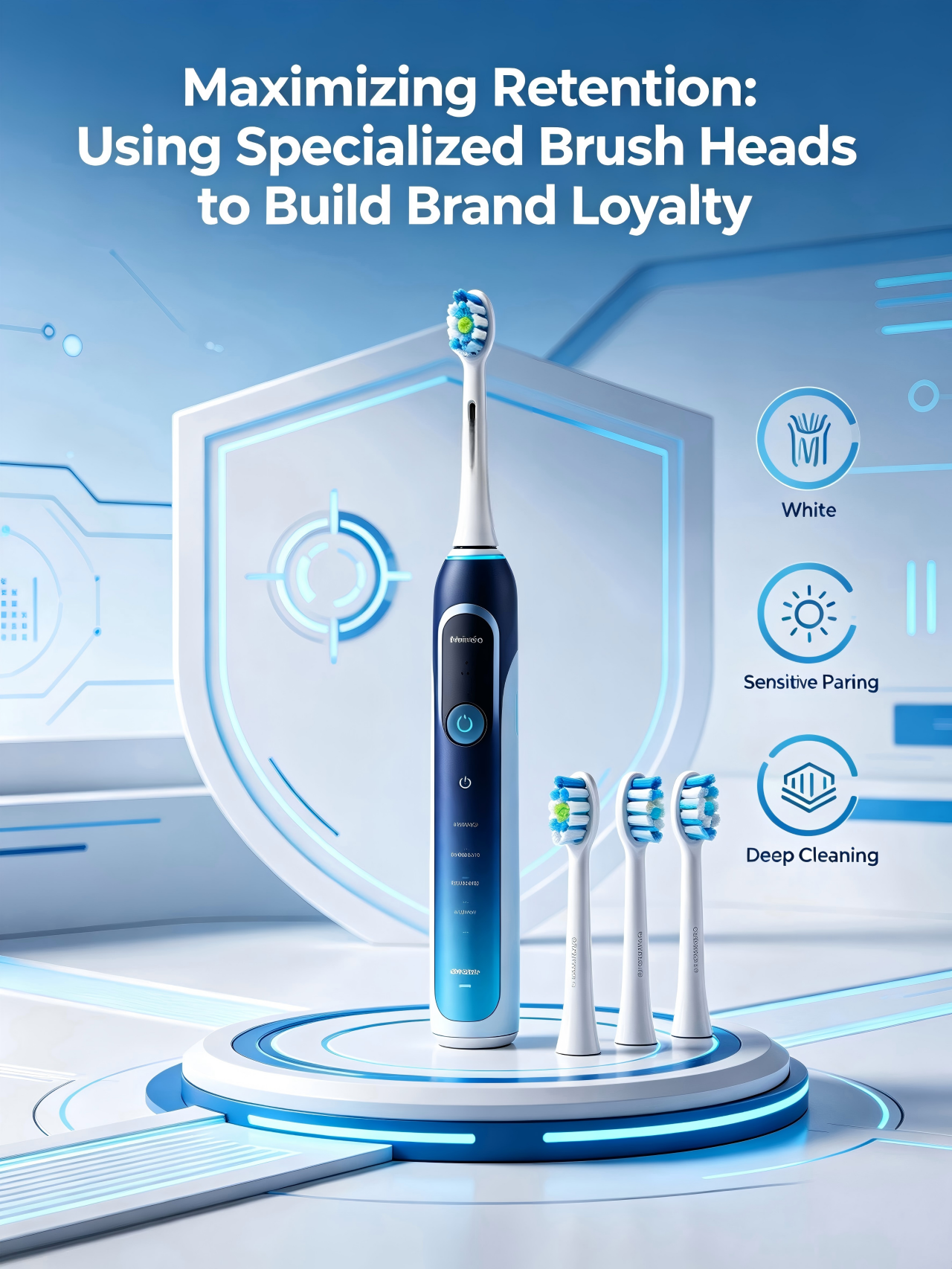
Struggling to keep customers coming back for your replacement brush heads? You launch new features, but they still defect to cheaper alternatives. The solution isn't more features; it's a smarter strategy.
Specialized brush heads build loyalty only when supported by a solid strategy. Success depends on a reliable supply chain, real material quality over marketing terms, and a focused lineup that reinforces your brand promise. This approach builds long-term trust and customer lifetime value.
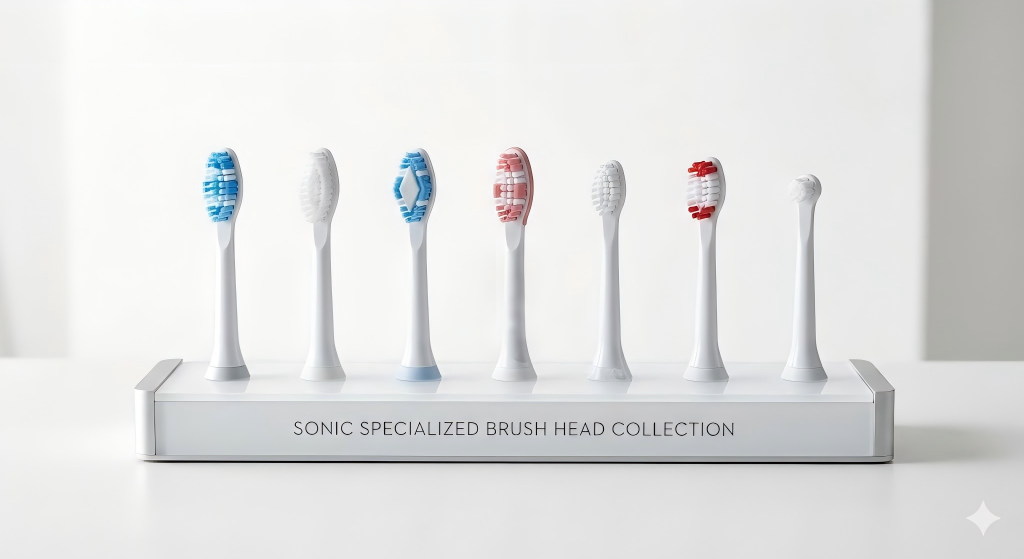
I've seen many brands believe that a wide range of specialized brush heads is the secret to locking in customers. The idea is simple: offer a head for whitening, one for sensitive gums, one for deep cleaning, and customers will have no reason to leave. It seems logical on the surface. But from my experience on the manufacturing floor, I can tell you that this is only a tiny part of the story. The real work of building loyalty happens long before a customer ever sees a "whitening" brush head on a store shelf. It starts with strategic decisions about logistics, materials, and brand identity. Let's look at what really matters.
Is your brush head strategy a marketing plan or a supply chain plan?
You launched an amazing new specialized brush head. But now, constant stockouts and high prices are driving your customers to third-party sellers. The real problem isn't your product; it's your logistics.
A consistent, affordable, and accessible supply of replacement heads is the true foundation of customer loyalty. A brilliant head that's often out of stock will destroy trust much faster than a standard head builds it. Your replenishment logistics are more important than your feature list.
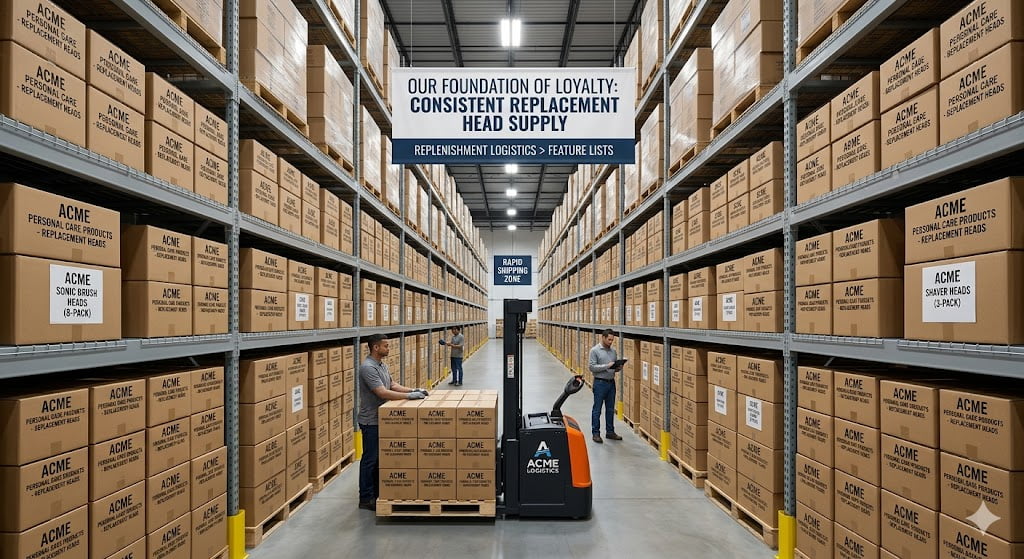
When brand managers come to us to develop a new brush head, their first questions are usually about features. They want to know about bristle patterns and new materials. The first question we ask them back is, "How will you guarantee this head is always in stock and easy for your customers to buy?" This often stops them in their tracks. They see retention as a product feature problem. We see it as a supply chain problem. A customer who loves your toothbrush handle but can't find or afford the replacement heads feels betrayed. They will quickly switch to a cheaper, more available generic option and you will lose them forever. A simple, standard brush head that is always available at a fair price builds more long-term value than a complex, specialized head that is hard to find. Before you design the product, you must design the replenishment experience.
| Strategy Focus | Marketing-Led Approach | Supply Chain-Led Approach |
|---|---|---|
| Primary Goal | Launching innovative, feature-rich heads. | Ensuring consistent, reliable availability. |
| Key Metric | Initial product sales and reviews. | Repeat purchase rate and customer lifetime value. |
| Risk Factor | Stockouts, high inventory costs for niche heads. | Less initial "wow" factor. |
| Customer Feeling | Initial excitement, later frustration. | Confidence, trust, and convenience. |
Are you selling marketing words or a real user experience?
Your packaging promises "advanced whitening" or "ultimate sensitive care." But customers try it and feel no real difference, so they switch to a cheaper generic head that feels about the same.
The true user experience comes from material science, not marketing labels. Details like bristle material (e.g., DuPont™ vs. generic nylon), tufting density, and end-rounding are what customers feel every day. This is what truly separates a premium product from a cheap knock-off.
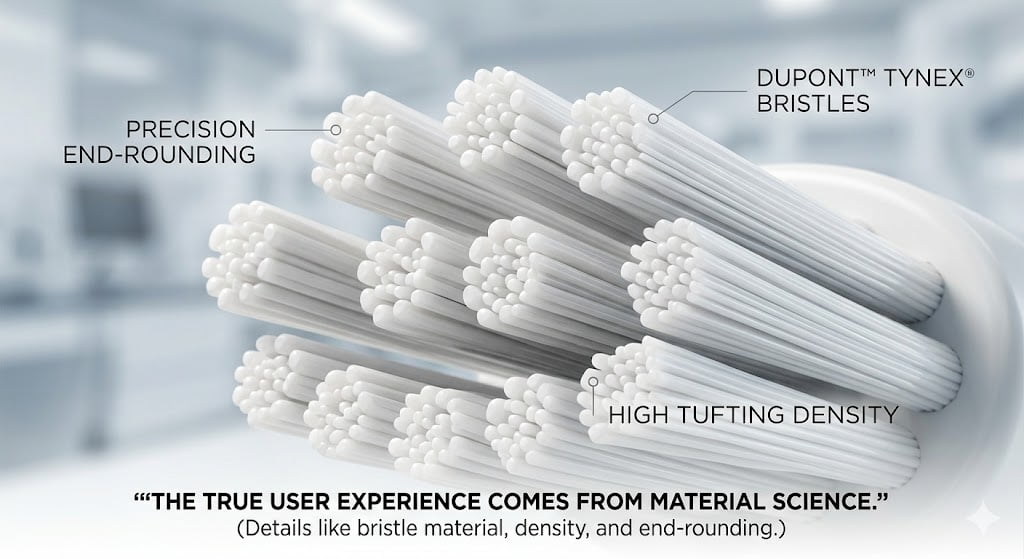
From analyzing after-sales feedback across dozens of projects, we've learned that customers are smart. They can feel the difference between a quality product and a cheap one after a few weeks of use. A "whitening" brush head with poor quality bristles that fray quickly won't create a loyal customer. The real magic is in the manufacturing details that you can't always see. For example, using genuine DuPont™ Tynex® bristles means better durability and performance1 over three months of use. Advanced tufting technology allows for higher bristle density, which provides a more effective clean. And ensuring a high percentage of bristle end-rounding creates a gentle, premium feel2 on the gums. These are the details that justify a higher price and make a customer feel they made a good investment. They are the foundation of a product that delivers on its promises.
| Component | Standard Choice | Premium Choice | Impact on Brand Loyalty |
|---|---|---|---|
| Bristles | Generic Nylon | DuPont™ Tynex® | Premium bristles feel better for longer, reinforcing quality. |
| Tufting | Standard Density | High-Density Anchorless | Denser bristles provide a superior clean, validating the purchase. |
| End-Rounding | <80% Rounded | >90% Rounded | Protects gums, reduces complaints, and builds trust. |
Could offering too many brush heads actually hurt your brand?
You want to offer a unique brush head for every possible customer need. But now, your customers are confused by the choices, and your inventory costs are getting out of control.
Over-specialization leads to customer confusion, supply chain fragility, and soaring inventory costs. A smarter strategy is to develop a few versatile, high-performance heads that serve the core needs of 80% of your target market. This simplifies everything.
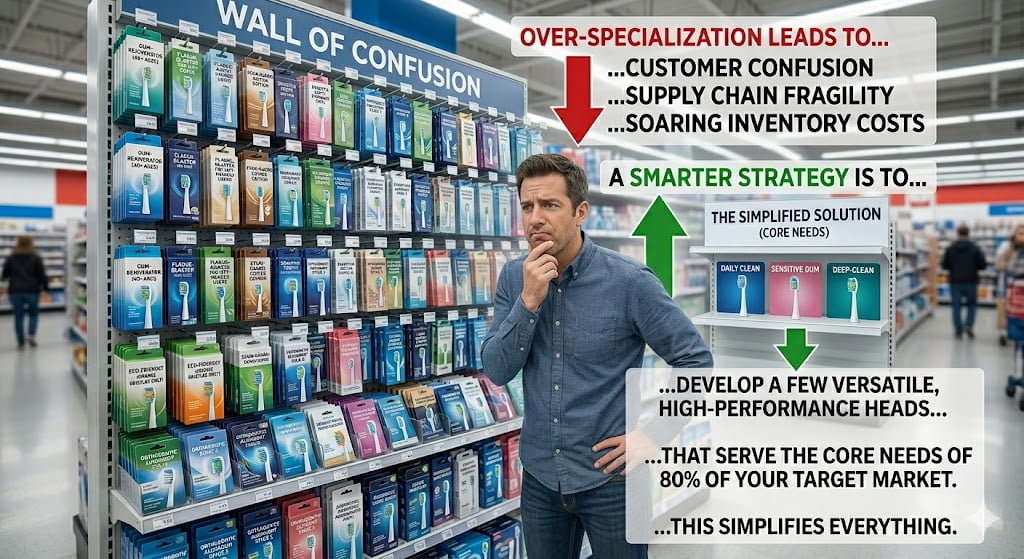
A common challenge we see with brands is the desire to match the product lineup of the market leader, who might offer five or six different heads. This seems like a competitive necessity, but it can be a trap. First, it creates "choice paralysis" for the customer. When faced with too many similar options, they often get confused and just buy the cheapest one, or worse, none at all. Second, it creates a logistical nightmare for you. Forecasting demand for six different SKUs is incredibly difficult. You end up with too much stock of unpopular heads and not enough of the popular ones. A much more effective strategy is to focus on one or two "hero" brush heads that are exceptionally well-made and cover the main needs of your audience, like a great all-around "ProClean" and a "GentleCare" option. This makes marketing easier, inventory management simpler, and the purchasing decision clearer for your customer.
| Approach | Broad Lineup (5+ SKUs) | Focused Lineup (1-3 SKUs) |
|---|---|---|
| Inventory Cost | High | Low & manageable |
| Customer Clarity | Low (confusing) | High (simple choice) |
| Supply Chain | Complex & fragile | Simple & robust |
| Marketing Focus | Diluted message | Strong, clear message |
Does your brush head lineup truly match your brand promise?
Your brush heads have all the latest features. But they don't quite feel like they belong to your brand, creating a disconnect for your most loyal customers. Your strategy needs alignment.
Customization must reinforce your brand's core value.3 A value-focused brand needs a durable, cost-effective head. A premium tech brand needs a unique design that justifies its price. Your brush head must extend, not contradict, your brand's story.
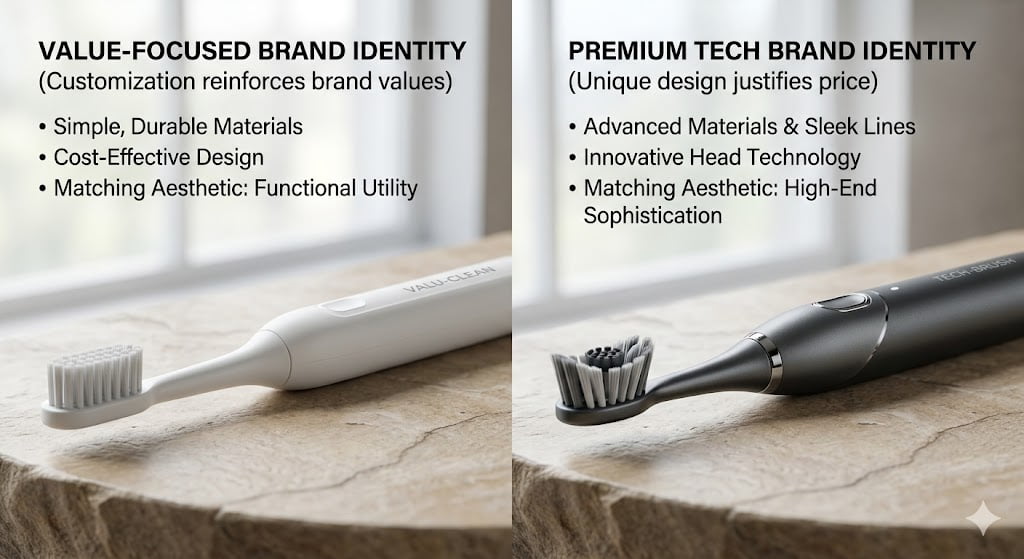
The first question we ask brand managers is not "What features do you want?" but "What experience reinforces your brand's promise to its customers?" The answer to this question should guide every decision about your brush head lineup. If your brand is built on accessibility and value, your top priority should be a single, reliable, and affordable standard head. Investing in a complex, expensive specialty head would contradict your core message. On the other hand, if your brand is a premium, technology-focused leader, you need to invest in a brush head with a unique material or a patented design that screams innovation. This justifies your price point and reinforces your brand identity. Your brush heads are not just a consumable; they are a recurring physical touchpoint with your customer4. Each one should feel like a natural extension of the brand they chose to trust.
| Brand Archetype | Core Promise | Ideal Brush Head Strategy |
|---|---|---|
| Value & Accessibility | Simple, reliable, affordable. | One durable, cost-effective standard head. |
| Premium & Tech | The best performance, cutting-edge. | Unique design or material, commands a higher price. |
| Wellness & Natural | Gentle, holistic, safe. | Focus on soft bristles, sustainable materials. |
Conclusion
Building brand loyalty with brush heads is not about adding more features. It's about a smart, focused strategy that aligns your supply chain, material choices, and brand promise to deliver a reliable experience.
"Physicochemical Properties of Curen® Filaments Versus Nylon ...", https://pmc.ncbi.nlm.nih.gov/articles/PMC11733252/. Technical specifications for nylon 612 filaments, commonly used in premium toothbrush bristles, highlight properties such as high abrasion resistance and stiffness retention in wet conditions, which contribute to bristle durability over months of use. Evidence role: mechanism; source type: institution. Supports: The technical properties of specific nylon formulations (like nylon 612, often marketed as Tynex®) that contribute to performance, such as bend recovery, wear resistance, and low water absorption.. Scope note: The source may be a materials database or manufacturer's technical sheet rather than a third-party comparative study. ↩
"A review of current toothbrush bristle endo-rounding studies - PubMed", https://pubmed.ncbi.nlm.nih.gov/8595590/. Dental health organizations like the American Dental Association specify that toothbrush bristles should be end-rounded to prevent scratching of the gums and abrasion of tooth enamel during brushing. Evidence role: expert_consensus; source type: institution. Supports: The importance of end-rounding toothbrush bristles to minimize the risk of damage to soft (gum) and hard (enamel) oral tissues.. ↩
"What Is Brand Identity? Tips & Examples for Shaping Yours", https://online.hbs.edu/blog/post/brand-identity. A foundational principle of brand strategy is that all customer touchpoints, from advertising to product design, must be consistent with the brand's core values and promise to build and maintain a strong brand identity. Evidence role: general_support; source type: education. Supports: The marketing principle that all aspects of a product and its marketing should be congruent with the core brand identity to create a strong, coherent message and build customer trust.. ↩
"The future of physical retail: 5 actions to elevate customer experience", https://mitsloan.mit.edu/ideas-made-to-matter/future-physical-retail-5-actions-to-elevate-customer-experience. In customer experience management, consumable products are considered critical post-purchase touchpoints. Each repeat purchase and use provides an opportunity for the brand to deliver on its promise and reinforce the customer relationship. Evidence role: general_support; source type: research. Supports: The role of consumable products in maintaining and shaping the post-purchase customer-brand relationship, where each replenishment is an interaction that can reinforce brand loyalty.. ↩