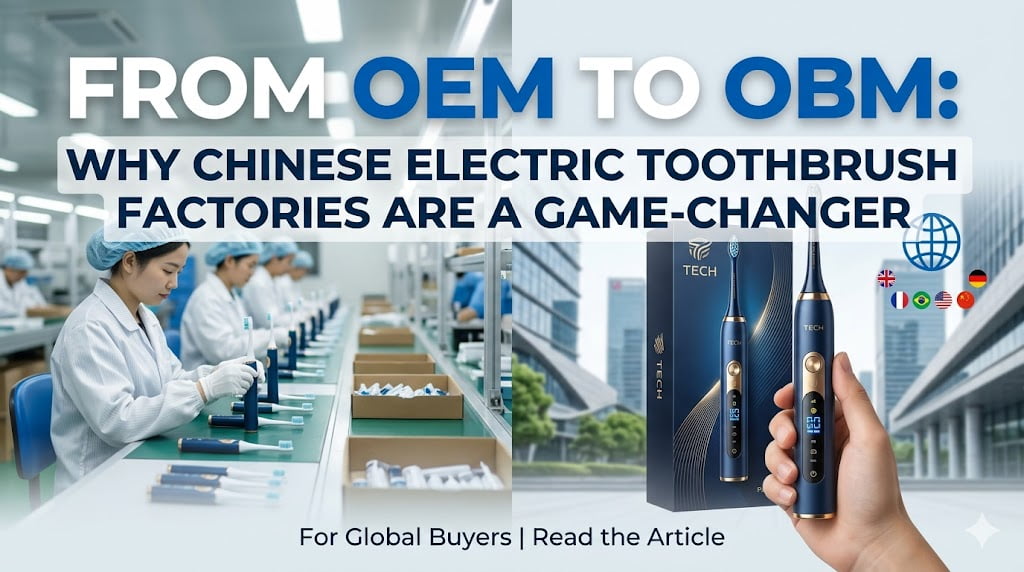
Sourcing from standard OEMs feels like a gamble on quality and innovation. This uncertainty adds risk and slows your market response, but partnering with an OBM-minded factory changes everything.
OBM factories in China are now game-changers. They offer superior R&D, built-in quality control, and agile supply chains. This evolution provides global buyers with more reliable, innovative, and market-savvy partners, reducing risks and accelerating growth.
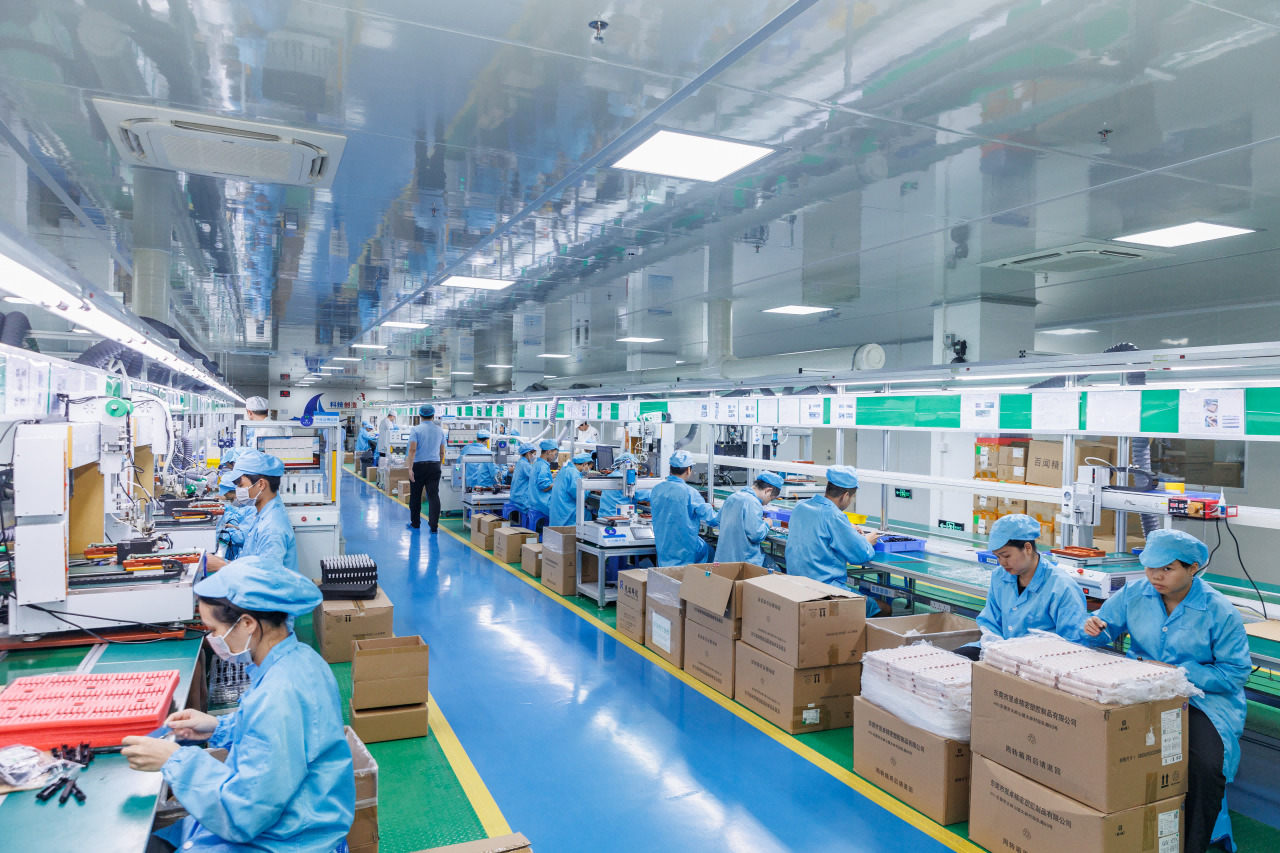
I've seen this shift firsthand over my years in the personal care appliance industry. It's not just a minor tweak in business models; it's a fundamental transformation in how manufacturing partners create value for buyers like you. This move from being a simple "Original Equipment Manufacturer" to also becoming an "Original Brand Manufacturer" has profound implications. Let's break down exactly what this evolution means for your business and why it should be a key factor in your sourcing strategy moving forward.
R&D-Driven: From "Following" to "Defining" the Market?
Are you tired of suppliers who only copy existing designs? This lack of real innovation can leave your brand constantly playing catch-up, always one step behind the market leaders.
Factories transitioning to OBM invest heavily in their own R&D labs. They focus on core technologies like advanced sonic motors, shock absorption patents, and smart sensors. This fundamental shift from "following" to "defining" trends gives you direct access to cutting-edge products.
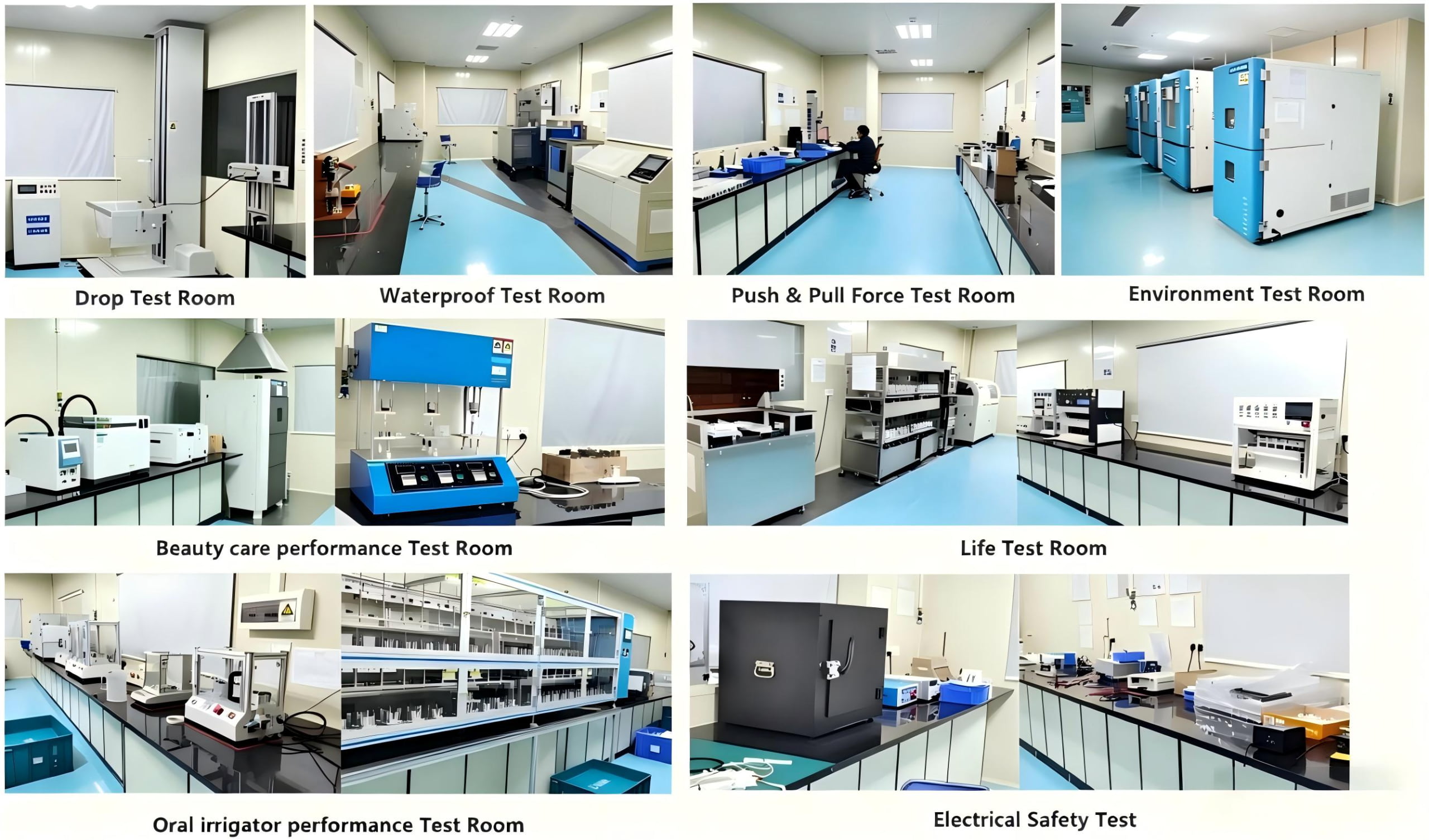
When I walk into a factory that is building its own brand, the difference is immediate. The R&D lab isn't a small room for reverse-engineering a competitor's product; it's a vibrant hub of creation and innovation. The engineers aren't just asking, "How can we make this cheaper?" Instead, they are asking, "How can we make this perform better?" This is because their own brand's reputation depends on the quality and performance of their technology. For an electric toothbrush, this translates into real-world investment in core technologies.
| Technology Focus | Traditional OEM | OBM-Minded Factory |
|---|---|---|
| Sonic Motor | Standard, off-the-shelf motor | Custom-developed for higher efficiency |
| Handle Design | Basic ergonomics, cost-focused | Patented anti-vibration & noise reduction |
| Smart Features | Simple timers | AI pressure sensors & position tracking |
For a buyer, this means you are no longer just sourcing a commodity. You are gaining a partner with a deep technical understanding that will define the next generation of personal care. This is the new "intelligence premium" you get from a modern manufacturing partner.
The "Brand-Quality" Correlation: Built-in Risk Mitigation?
Do you worry about inconsistent product quality from one batch to the next? This unpredictability can damage your brand's reputation and lead to soaring warranty costs, eating into your profits.
When a factory builds its own brand (OBM), it has skin in the game. To protect its own brand image, it elevates quality control standards across all production lines, not just its own. This inherently reduces your risk and ensures higher, more consistent quality.
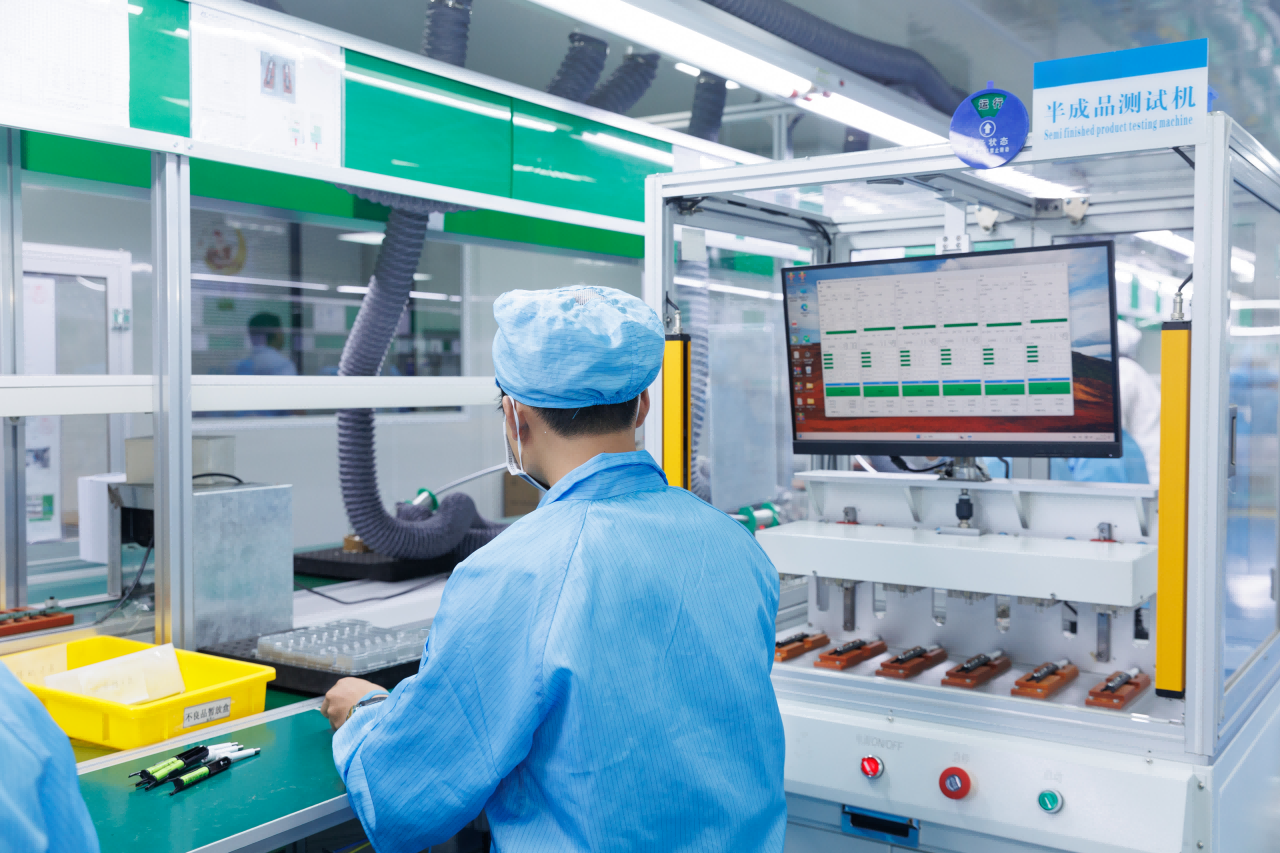
I remember a conversation with a procurement head who got burned by a supplier. A successful first order was followed by a disastrous second batch with a 15% defect rate. The factory had no long-term stake. An OBM-focused manufacturer operates on a completely different principle. Their own brand name is on the line with every single unit that leaves the facility, whether it carries their logo or yours. To protect that hard-won reputation, they must implement stricter quality management systems. They don't just get certifications like ISO 9001 or ISO 13485 for a certificate on the wall; they live by those standards in their daily operations. This means conducting multi-level testing, from inspecting raw materials to rigorous functional tests on finished goods. This powerful "brand-quality" correlation acts as your built-in insurance policy, significantly lowering your risk, minimizing warranty costs, and ultimately strengthening your own brand's reputation in the market.
Agile Supply Chains: Shortening the "Market Feedback Loop"?
Traditional large-order manufacturing is slow and rigid. This makes you unresponsive to market changes, causing you to miss fast-moving trends and risk getting stuck with outdated inventory.
Factories with a brand mindset understand the critical need for speed and flexibility. They use digital production planning and smart manufacturing to handle both large contracts and smaller, rapid restock orders. This agility shortens the market feedback loop, allowing you to react to trends quickly.
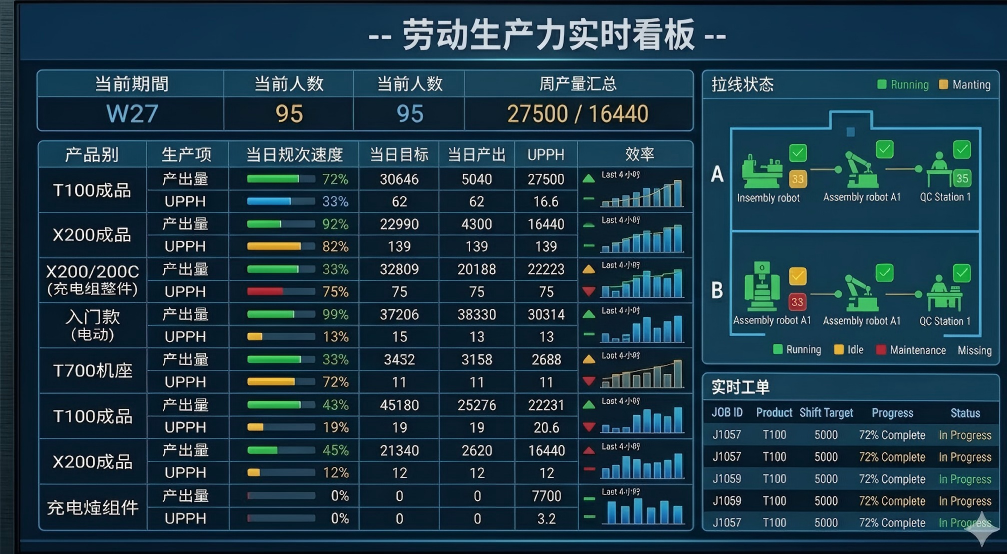
The old model of sourcing was simple: place a massive order six months in advance and hope it sells. But today's e-commerce and social media-driven market doesn't wait. An OBM-minded supplier understands this reality because they face it with their own brand. They have mastered the art of "small steps, fast sprints." They achieve this by investing heavily in digital-driven efficiency and agile workflows that allow for incredible flexibility. This means their factory is not just configured for massive, one-off production runs. They have the systems in place for quick turnarounds on smaller, more strategic order quantities.
| Supply Chain Aspect | Traditional OEM | OBM-Minded Factory |
|---|---|---|
| Order Volume | Large MOQs only | Flexible (large & small) |
| Lead Time | 3-6 months | Weeks, not months |
| Responsiveness | Low | High |
Imagine one of your products suddenly goes viral on TikTok. A traditional OEM might tell you the next available production slot is three months away. An agile OBM partner can often adjust their digital production schedule to get you restocked and back in business in a fraction of that time. This capability is a massive competitive advantage.
Consumer-Centric Intelligence: A Supplier Who Speaks "Market"?
Does your current supplier truly understand your end customer? A fundamental lack of market insight leads to products that look good on a spec sheet but ultimately miss the mark with consumers.
Building their own brand forces a factory to become a market expert. They actively study TikTok trends and analyze consumer habits, like grip preferences or brushing frequency in different countries. This consumer-centric intelligence means they can co-create products that truly resonate with your audience.
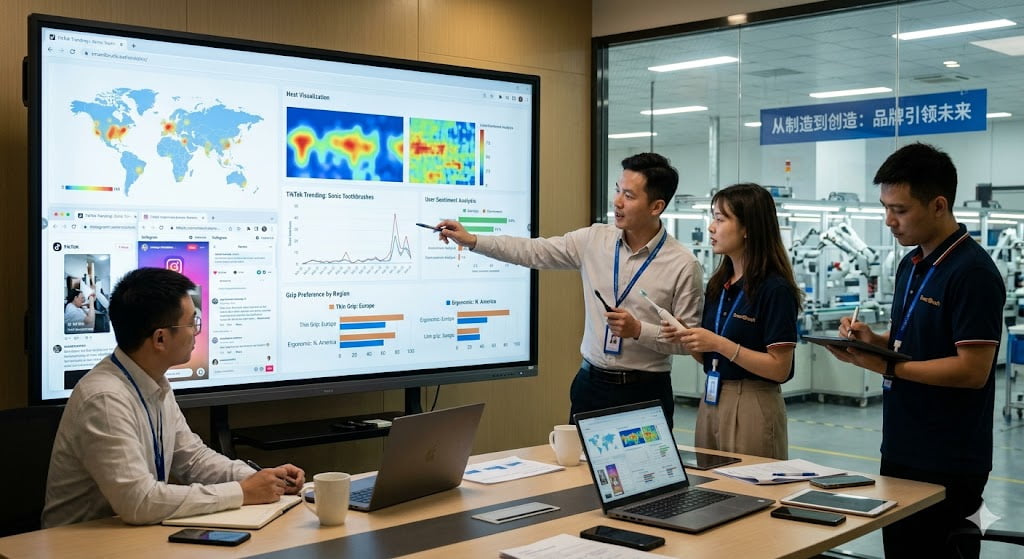
I used to spend countless hours on video calls trying to explain market nuances to my suppliers. Now, with OBM-minded partners, the conversation is a two-way street. They often come to me with proactive ideas. They'll say things like, "We noticed a rising trend on social media for compact, travel-friendly hair dryers," or "Our research shows that German consumers prefer a heavier, more solid feel for their toothbrush handles compared to Japanese consumers." They know this because selling their own brand forces them to be deeply connected to the end-user. They are no longer just assemblers of components; they are active market analysts. This shift is profound. When your supplier understands why a certain feature is important to a user in North America versus one in Southeast Asia, the entire product development process transforms into a true collaboration. You get a partner who speaks "market," not just "manufacturing."
A New Era of Collaboration: OBM & OEM Symbiosis?
Launching a new product line from scratch is expensive, risky, and slow. You can miss crucial market windows while navigating the complexities of R&D, tooling, certification, and branding.
The new collaboration model is a symbiosis. You can work with an OBM factory on a traditional OEM/ODM basis, benefiting from their higher standards. Or, you can directly license or distribute their mature OBM products, gaining a high-margin item with zero R&D cost.
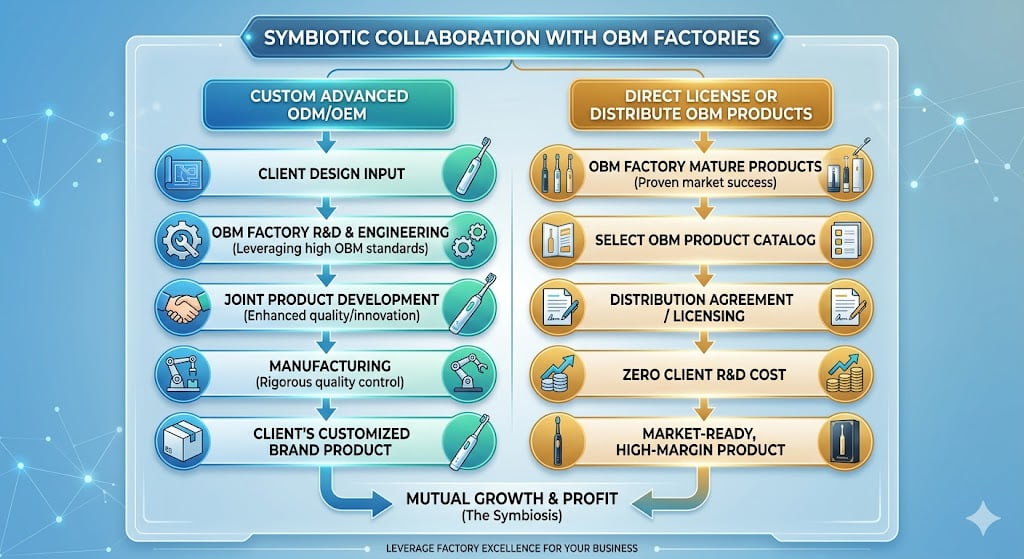
This evolution to OBM doesn't signal the end of OEM/ODM partnerships. Instead, it creates a powerful and flexible new synergy that gives buyers like you more options than ever before. This creates two distinct, highly valuable pathways for collaboration.
Path 1: Enhanced ODM/OEM
You can pursue a traditional custom product development project. In this scenario, you directly benefit from the advanced R&D capabilities and superior quality control systems that the factory built to support its own brand. Your custom product is built on a foundation of proven technology and rigorous quality assurance, de-risking the entire process.
Path 2: Fast-to-Market Distribution
For distributors, retailers, or brands looking to quickly expand their offerings, a new, faster path to market has opened up. You can license or become a regional distributor for the factory's established, market-tested OBM products. I've seen clients use this strategy to test a new product category with minimal investment and risk. You get a proven product with existing certifications and brand assets, allowing you to access a high-margin revenue stream almost immediately.
Conclusion: Choosing a Partner with a "Brand Soul"
In the competitive landscape of 2026, finding a factory that merely follows instructions is no longer enough. The shift of Chinese electric toothbrush factories toward OBM represents a "Premium on Intelligence" in manufacturing.
For global partners, choosing an OBM-capable factory means you aren't just selecting a manufacturing base—you are choosing a strategic ally with market intuition, technical sovereignty, and a long-term vision for growth.