Portable water flossers are great for travel. But they have a dirty secret inside. This hidden problem can damage your brand's reputation and customer trust.
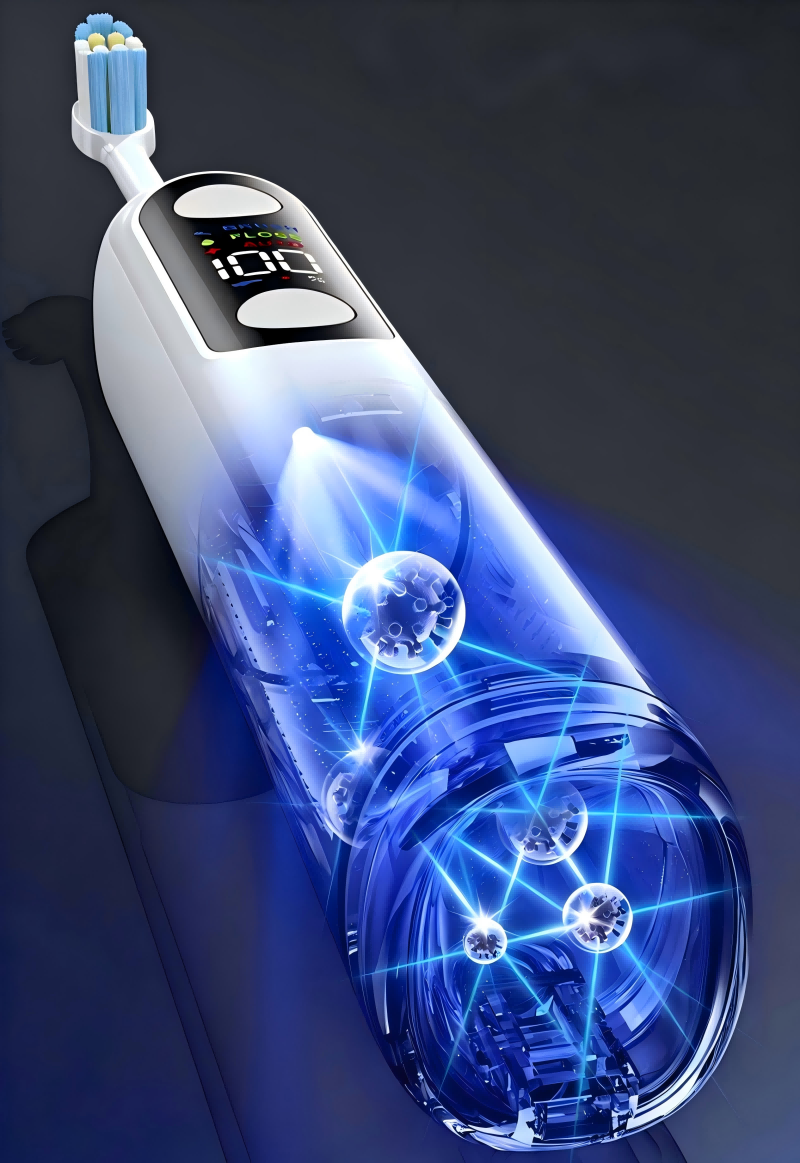
Yes, the 2-in-1 UV sanitizing water flosser is the definitive solution. By integrating UV-C light, it automatically sterilizes the water tank and nozzle. This actively kills mold and bacteria, addressing the core hygiene failure of standard portable models and protecting user health.
I've been in this industry for a long time. I've seen countless products succeed and fail. The ones that succeed solve a real, often unspoken, user problem. Portable oral care devices promise convenience. But what they don't mention is the constant, damp environment they create inside their own water tanks. This is a perfect breeding ground for germs. It’s a crisis waiting to happen for any brand that ignores it. So, we need to talk about engineering a real solution, not just another portable gadget. Let’s look at why this is so critical.
Is Portability's Achilles' Heel a Bio-film and Bacteria Trap?
Your customers love the idea of a portable flosser. But they don't love it when it starts to smell bad or grow visible mold. This is a real risk.
Absolutely. The enclosed, damp, and dark water tank of a standard portable flosser is a perfect incubator for bacteria and bio-film. These microorganisms cause bad odors and can pose health risks, leading to negative reviews and serious damage to brand loyalty.
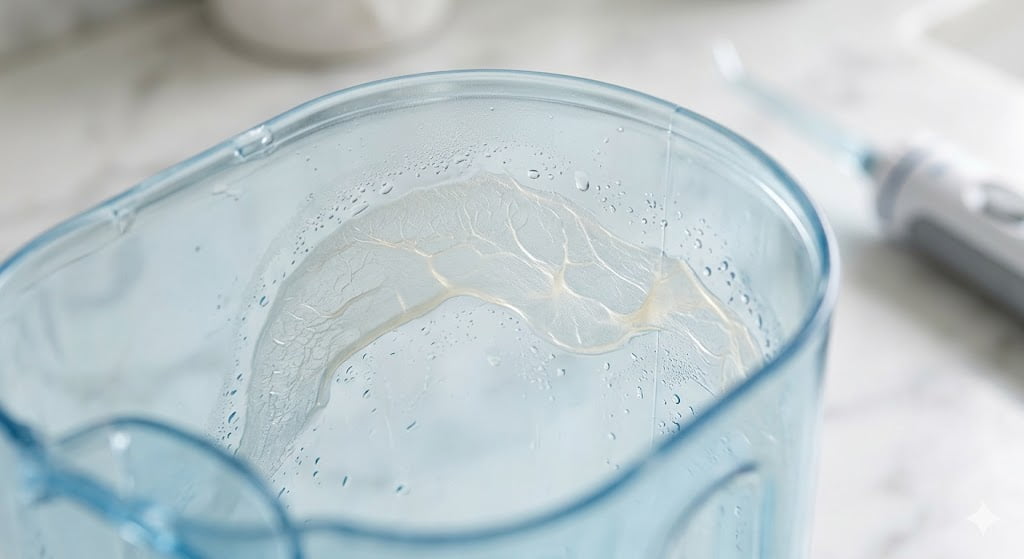
In my experience, the first wave of negative feedback on a new personal care product can be devastating. I remember a few years ago, we were tracking social media for a different product line. We saw a spike in comments like "my machine smells musty" and "I found black stuff on the nozzle." These aren't just complaints; they are poison for a brand. The problem is a substance called bio-film. It's a slimy colony of bacteria that sticks to wet surfaces. Once it forms inside a water flosser's tank or tubes, it's very hard to remove with simple rinsing. The device that's supposed to clean the user's mouth is actually spraying them with a cocktail of germs. For a product manager or brand head, this is the ultimate nightmare. It undermines the core promise of your product.
| Feature | Standard Portable Flosser | The "Hidden" Reality |
|---|---|---|
| Environment | Enclosed water tank | Dark, damp, and warm |
| User Behavior | Rinses after use | Rarely dries it completely |
| Result | Appears clean | Becomes a breeding ground for bacteria |
| Brand Impact | Positive initial sales | Risk of "stinky machine" complaints |
Does a 2-in-1 Design Strategically Redefine User Compliance?
We ask customers to clean their devices. But let's be honest, most people don't do it properly. This creates a gap between ideal use and real-world use.
Yes, it completely redefines compliance by removing the user from the equation. An integrated, automatic UV sanitization cycle works without any user effort. This ensures the device stays hygienic, making "clean" the default state, not a chore the user might forget or ignore.
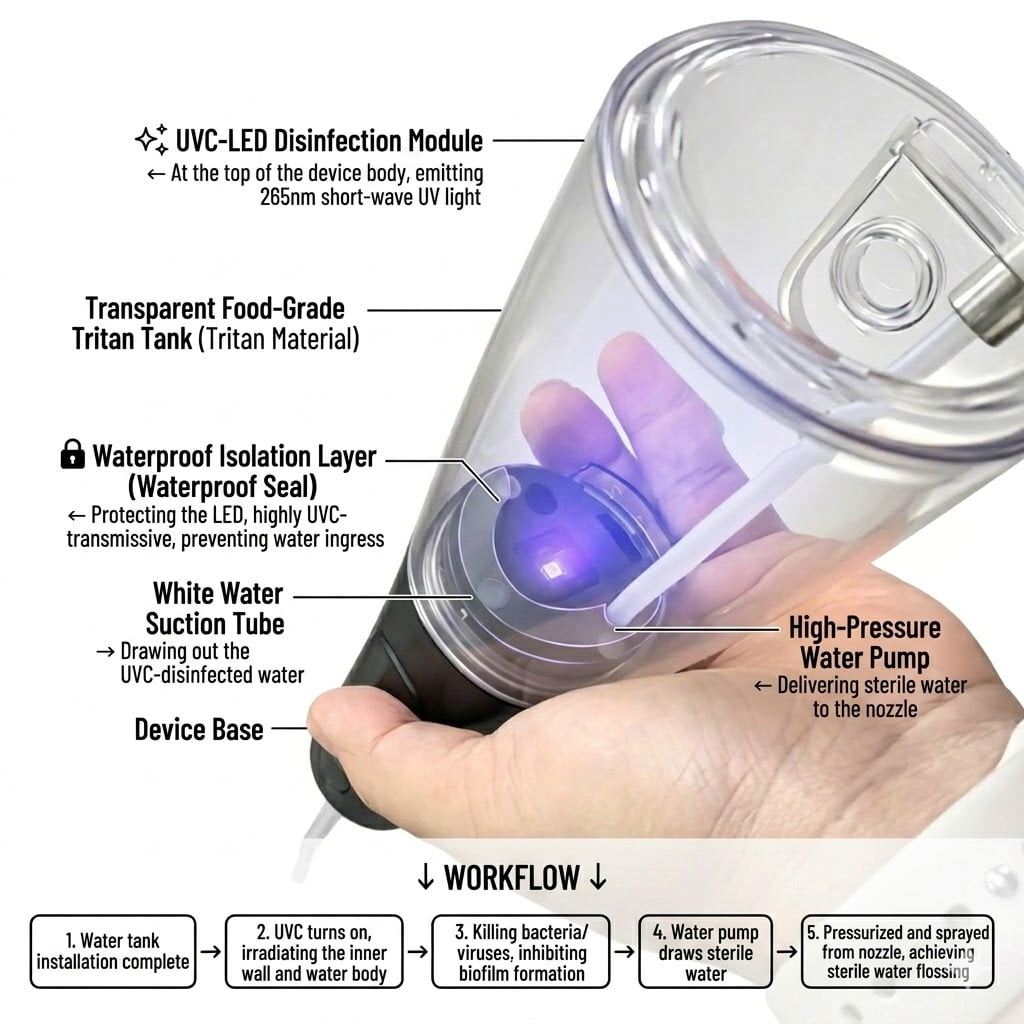
Think about it from a user's perspective. After using a water flosser, they are supposed to empty it, rinse it, and let it air dry completely. How many actually follow all those steps every single time? Very few. My team and I realized that we can't solve a hardware problem with a software solution—that is, by just telling people what to do in the instruction manual. The solution must be engineered into the product itself. By integrating a UV-C light directly into the device, sanitization becomes an automatic, seamless part of the product's function. The user doesn't have to remember anything. This strategic integration is a powerful selling point. It shows that your brand has thought deeply about the entire user experience, including long-term hygiene and safety. It moves the product from being a simple tool to a smart, self-maintaining health appliance. This is how you build trust and justify a premium position in the market.
| Cleaning Method | User Responsibility | Effectiveness | Compliance Rate |
|---|---|---|---|
| Manual Rinsing | High (empty, rinse, dry) | Low (bio-film is resistant) | Very Low |
| Chemical Tablets | Medium (buy, remember to use) | Medium (can be effective) | Low |
| Integrated UV-C | None (automatic cycle) | High (kills 99.9% of germs) | High (automatic) |
Can You Balance a Compact Form Factor with UV-C Efficacy Through Precision Engineering?
Adding new technology to a small device is always hard. You have to fit everything in without making the product bulky or compromising its performance. This is a big challenge.
Yes, it is possible with precision engineering. The key is to use miniaturized, high-efficiency UV-C LED components instead of bulky traditional lamps. This, combined with smart power management and reflective internal tank coatings, ensures effective sanitization without sacrificing the device's portability or battery life.
Our engineering team spent months on this problem. The first challenge was space. A portable water flosser is already packed with a motor, pump, battery, and water tank. Where do you put a UV light? The solution was to move away from old-style mercury UV lamps and use modern UV-C LEDs. These are tiny but powerful. We could place them strategically at the bottom of the water tank to irradiate the entire volume of water and the internal surfaces. The second challenge was power. UV-C LEDs need energy, and a portable device runs on a battery. We had to design an intelligent power management system that runs the sanitization cycle efficiently, often when the device is charging, so it doesn't impact the user's ability to use it. This delicate balance of size, power, and sanitizing performance is what separates a premium, well-engineered product from a cheap imitation. It is a tangible demonstration of R&D investment.
| Engineering Aspect | Challenge | Solution |
|---|---|---|
| Component Size | Traditional UV lamps are too big. | Use miniaturized UV-C LEDs. |
| Power Consumption | UV light drains the battery. | Implement smart power management (e.g., sanitize while charging). |
| Sanitization Coverage | Shadows can block UV light. | Use reflective internal tank materials and optimal LED placement. |
| Heat Dissipation | LEDs produce some heat. | Integrate passive cooling into the device's internal structure. |
Is Implementing Fail-Safe Sensors for Global Compliance a Top Priority?
When you add technology like UV light, safety becomes the number one concern. You can't afford any mistakes, especially when you sell to international markets with strict rules.
It is a non-negotiable priority. To meet global standards like EPA and CE, you must include fail-safe sensors. A sensor that automatically shuts off the UV light when the tank is opened is essential. This prevents accidental exposure and is a key compliance item B2B buyers look for.
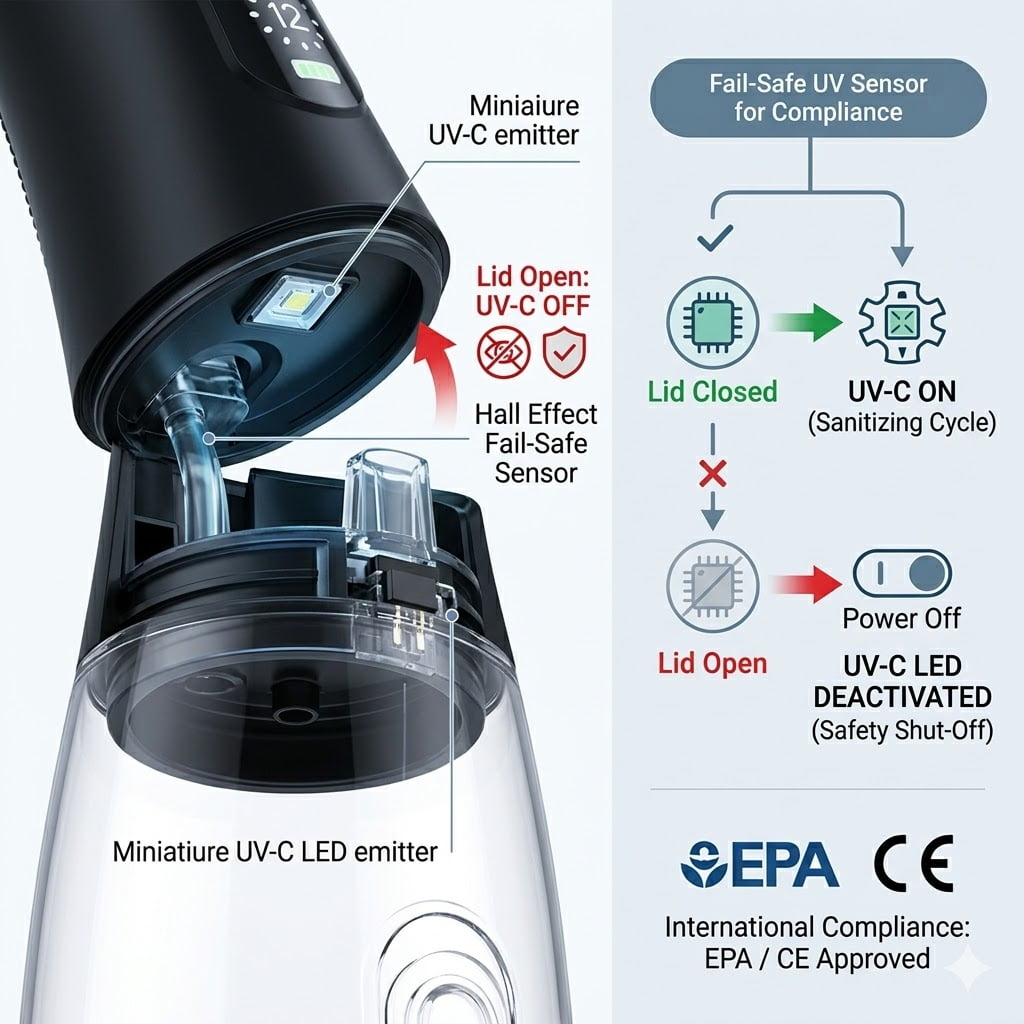
As an OEM/ODM partner, our clients trust us to deliver products that are safe and compliant. For any product with UV-C technology, this is our first discussion. B2B customers, especially experienced procurement heads like Manager Li, will ask for compliance documents before they even discuss pricing. They need to know the product meets regulations like the EPA's requirements in the U.S. or CE-LVD/EMC in Europe. These regulations are not just paperwork; they concern real safety features. The most critical one is preventing accidental user exposure to UV-C light, which can be harmful. The simplest and most effective solution is to implement a fail-safe sensor, such as a magnetic switch or a physical contact switch. This sensor ensures the UV-C LED is only active when the water tank is fully and securely closed. If the user opens it, the light shuts off instantly. This isn't an optional feature; it is a fundamental requirement for building a responsible and globally marketable product.
Key Compliance Checklist for UV-C Products
- Safety Certification: Is the product CE-LVD/EMC certified for electrical safety and electromagnetic compatibility?
- Regulatory Compliance: Does it meet EPA (US) or BPR (EU) requirements for pesticidal devices1?
- Fail-Safe Mechanism: Is there an automatic shut-off sensor to prevent UV exposure?
- Material Safety: Are all plastic parts that are exposed to UV light rated for UV degradation?
- Labeling & Manual: Does the packaging and manual include all necessary warnings and instructions as required by law?
Does Adding "Clean-Tech" Turn a Commodity into a Premium Product and Affect Market Positioning?
The market is full of basic, cheap water flossers. It's a race to the bottom on price. How can your brand stand out and command a higher price?
Absolutely. Integrating "Clean-Tech" like UV sanitization immediately elevates the product from a simple commodity to a premium, health-focused device. This feature justifies a 25%-40% price premium and shifts the brand's positioning towards innovation, safety, and professional-grade care.
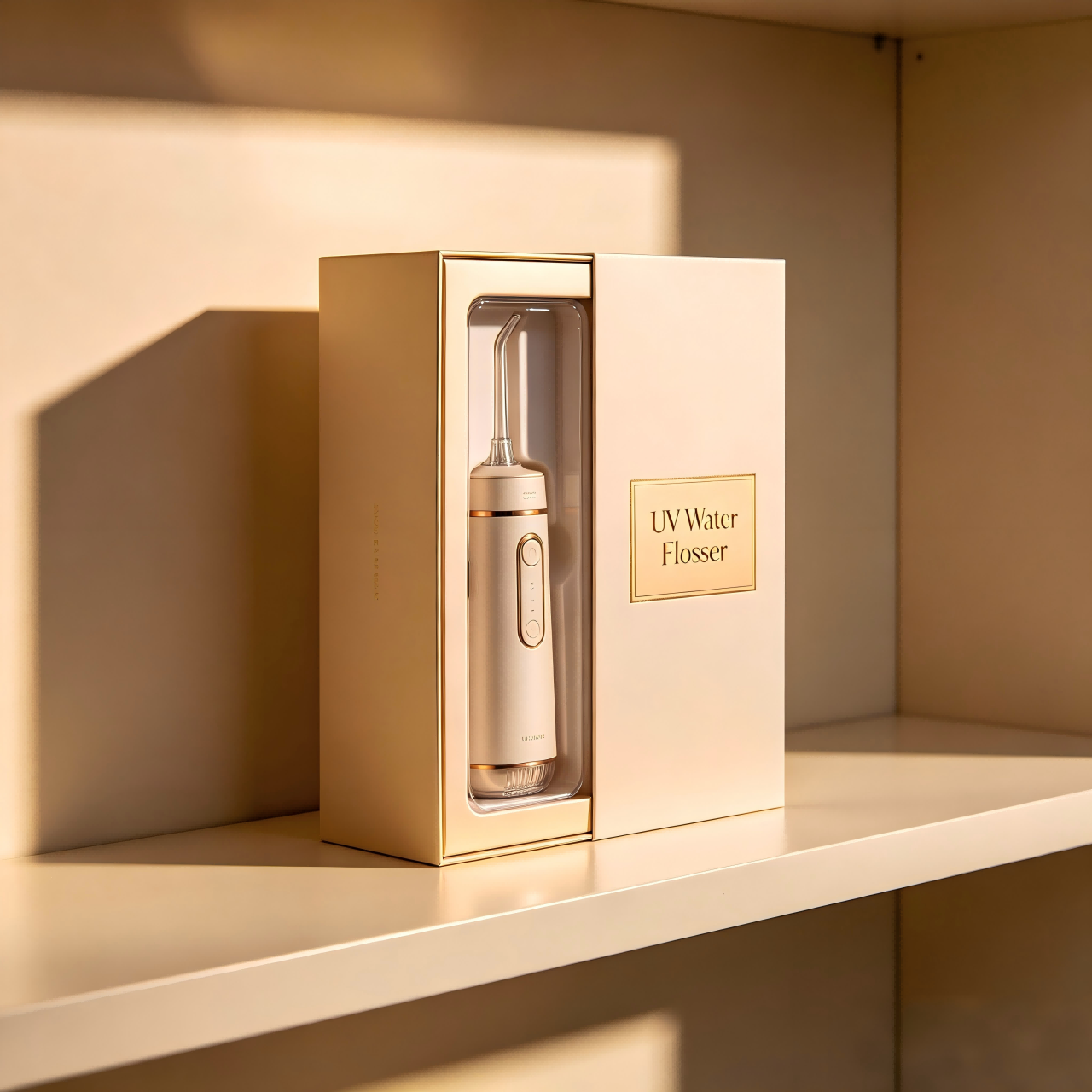
In a crowded market, features that solve real problems are what create value. Hygiene is a powerful motivator for consumers. When you can market a product not just on its primary function (flossing) but also on a secondary, crucial benefit (it cleans itself), you change the conversation. You are no longer just competing on pressure settings or tank size. You are competing on health and peace of mind. Our market analysis shows that products with a tangible "Clean-Tech" story, like UV sanitization, can support a retail price premium of 25% to 40% over their standard counterparts. Furthermore, these are the types of products that dental professionals are more comfortable recommending. They understand the risks of bio-film and appreciate a product that actively addresses it. For a brand, this is a golden opportunity to occupy a premium, expert-endorsed space in the market, far away from the low-margin commodity sellers. It's an investment in brand equity.
| Product Type | Market Position | Key Selling Point | Target Customer |
|---|---|---|---|
| Standard Flosser | Commodity | Low Price | Price-sensitive buyer |
| UV Sanitizing Flosser | Premium | Hygiene, Safety, Innovation | Health-conscious, tech-savvy buyer |
Conclusion
UV sanitization isn't just a feature; it's a fundamental upgrade for portable oral care. It protects users from hidden bacteria and protects your brand from the risk of negative feedback.
"EPA Regulations About UV Lights that Claim to Kill or Be Effective ...", https://www.epa.gov/compliance/compliance-advisory-epa-regulations-about-uv-lights-claim-kill-or-be-effective-against. Under the Federal Insecticide, Fungicide, and Rodenticide Act (FIFRA), the U.S. Environmental Protection Agency (EPA) regulates certain UV light-emitting products as 'pesticidal devices,' which are instruments used to destroy, repel, or mitigate any pest, including bacteria and viruses. Evidence role: definition; source type: government. Supports: The source should be an official EPA document or webpage that defines 'pesticidal devices' under the Federal Insecticide, Fungicide, and Rodenticide Act (FIFRA) and explicitly includes devices that use physical means, like UV light, to mitigate pests, including microorganisms.. ↩